What is Procurement in Supply Chain Management? Process, Types & Examples (2026 Guide)
Struggling to understand procurement in supply chain? Learn the process, types, and real-world examples to cut costs and make smarter, more effective sourcing decisions.
What is Procurement?
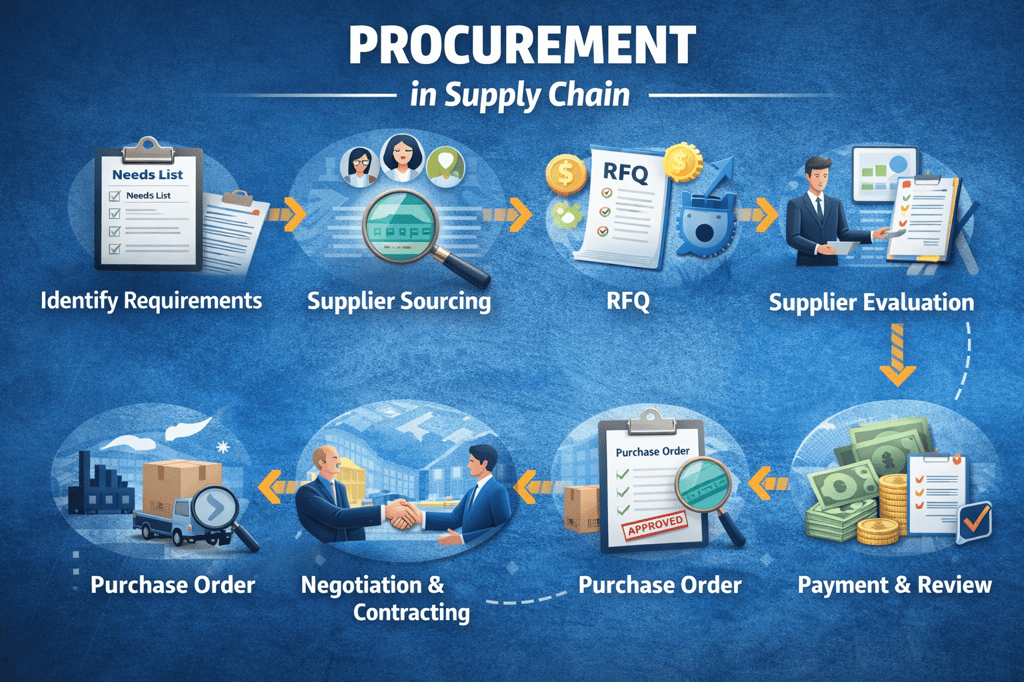
Procurement in supply chain management refers to the process of sourcing, purchasing, and acquiring goods or services that a business needs to operate efficiently. It ensures that the right materials are obtained at the right quality, price, quantity, and time from reliable suppliers.
In simple terms, procurement is not just about buying—it involves strategic decision-making, supplier evaluation, contract negotiation, and long-term relationship management.
It involves much more than just placing orders. Procurement includes:
Identifying business needs
Selecting suppliers
Negotiating contracts
Managing supplier relationships
Ensuring timely delivery
In simple terms, procurement ensures that the right products are available at the right time, in the right quantity, at the right price.
Procurement in the Supply Chain
Procurement is the starting point of the supply chain before production, warehousing & logistics. Without it, production, distribution, and delivery cannot happen. Procurement plays a critical role in maintaining smooth operations. A well-managed procurement process helps businesses:
Reduce costs through better supplier selection and negotiation
Ensure consistent quality of raw materials or services
Avoid supply disruptions
Improve overall operational efficiency
Build strong supplier relationships for long-term success
How Procurement Fits into the Supply Chain:
Procurement → Sourcing raw materials or goods
Production → Manufacturing products
Warehousing → Storing finished goods
Distribution → Delivering to customers
If procurement fails—due to delays, poor quality, or high costs—the entire supply chain is affected.
Key Objectives of Procurement
The procurement function focuses on achieving several important goals:
Cost Efficiency – Getting the best value for money
Quality Assurance – Ensuring materials meet required standards
Supplier Reliability – Working with dependable vendors
Risk Management – Reducing supply disruptions
Timely Delivery – Avoiding production delays
A strong procurement strategy helps businesses stay competitive and profitable.
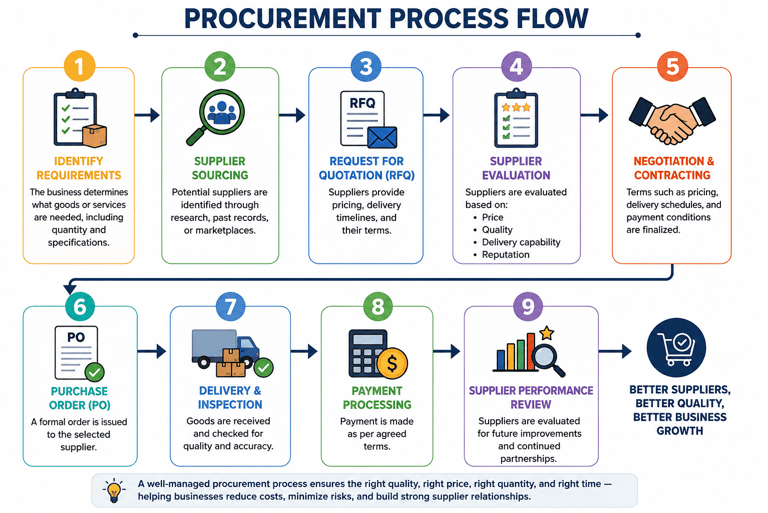
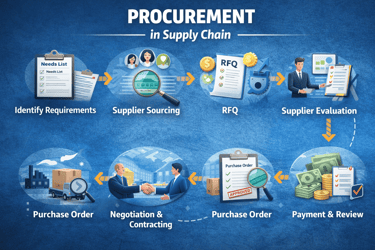
Procurement Process (Step-by-Step)
To understand procurement better, let’s look at how it works in a real business scenario.
Imagine a garment manufacturing company that produces T-shirts for an e-commerce brand.
1. Identify Requirements
The production team forecasts demand for the next month and realizes they need:
5,000 meters of cotton fabric
2,000 zippers
Packaging materials
They also define specifications like fabric quality, GSM, and color.
2. Supplier Sourcing
The procurement team searches for suppliers:
Existing vendors from past orders
New suppliers from B2B platforms and industry contacts
They shortlist a few reliable options.
3. Request for Quotation (RFQ)
The team sends RFQs to multiple suppliers asking for:
Price per unit
Delivery timelines
Payment terms
Suppliers respond with their quotations.
4. Supplier Evaluation
Now, the company compares suppliers based on:
Price competitiveness
Product quality samples
Delivery reliability
Market reputation
For example, one supplier may be cheaper but has slower delivery, while another is slightly expensive but highly reliable.
5. Negotiation & Contracting
The procurement manager negotiates:
Bulk discounts
Faster delivery timelines
Better payment terms (e.g., 30-day credit)
Once finalized, both parties agree on a contract.
6. Purchase Order (PO)
The company issues a formal Purchase Order (PO) that includes:
Item details
Quantity
Price
Delivery date
This acts as an official confirmation of the order.
7. Delivery & Inspection
The supplier delivers the materials to the warehouse.
The quality team inspects:
Fabric quality
Quantity received
Any damages
If everything meets standards, the goods are accepted.
8. Payment Processing
The finance team processes payment based on agreed terms—either immediately or after a credit period.
9. Supplier Performance Review
After completion, the company evaluates the supplier:
Was the delivery on time?
Was the quality consistent?
Were there any issues?
This helps decide whether to continue working with the supplier in the future. Here's a visual representation for easy understanding,
Types of Procurement
Procurement can be categorized based on what a company is purchasing. Understanding the different types of procurement helps businesses manage costs, improve efficiency, and ensure smooth operations.
1. Direct Procurement
Direct procurement involves purchasing raw materials or components that are directly used in the production of finished goods.
🔹 Real-World Example:
An automobile manufacturer procures steel, tires, and engine components to build cars. Without these materials, production cannot take place.
🔹 Why it matters:
Any delay or quality issue in direct procurement can stop production completely, impacting revenue and customer delivery timelines.
2. Indirect Procurement
Indirect procurement focuses on purchasing goods and services that support daily business operations but are not part of the final product.
🔹 Real-World Example:
A corporate office purchasing laptops, printers, office stationery, or software subscriptions for employees.
🔹 Why it matters:
While indirect procurement doesn’t affect production directly, it plays a key role in employee productivity and smooth business functioning.
3. Services Procurement
Services procurement involves hiring external service providers to perform specific business functions.
🔹 Real-World Example:
A company outsourcing logistics to a third-party provider for transportation and delivery, or hiring consultants for process improvement.
🔹 Why it matters:
Efficient service procurement helps businesses focus on core operations while experts handle specialized tasks.
Procurement vs Purchasing: What’s the Difference?
Many people use these terms interchangeably, but they are not the same.
Procurement is a strategic process that includes sourcing, negotiation, and supplier management.
Purchasing is a subset of procurement and focuses mainly on ordering and payment.
Think of procurement as the big picture, while purchasing is just one step within it.
Importance of Procurement in Supply Chain
Procurement directly impacts the efficiency and success of the entire supply chain.
1. Cost Control
Cost control is one of the most critical benefits of an effective procurement strategy. By carefully selecting suppliers, negotiating better pricing, and purchasing in optimal quantities, businesses can significantly reduce unnecessary expenses. Procurement teams also analyze total cost of ownership, which includes transportation, storage, and maintenance costs—not just the purchase price.
For example, a company that builds long-term relationships with suppliers may secure bulk discounts or favorable payment terms, directly improving cash flow. Additionally, avoiding last-minute purchases helps prevent premium pricing. Over time, these savings contribute to higher profit margins and better financial stability, making procurement a key driver of cost efficiency in supply chain management.
2. Quality Management
Procurement plays a major role in maintaining product and service quality. Selecting the right suppliers ensures that raw materials, components, or services meet required standards and specifications. Poor-quality inputs can lead to defective products, increased returns, and damage to brand reputation.
A strong procurement process includes supplier audits, quality checks, and performance tracking to ensure consistency. For instance, in manufacturing, sourcing high-quality raw materials directly impacts the durability and reliability of the final product. By prioritizing quality over just price, businesses can enhance customer satisfaction, build trust, and reduce long-term costs associated with rework or replacements.
3. Supply Chain Stability
A stable supply chain depends heavily on reliable procurement practices. When businesses work with dependable suppliers and maintain proper planning, they can avoid disruptions such as stockouts or production delays. Procurement teams often diversify suppliers and maintain safety stock to reduce dependency on a single source.
For example, during unexpected events like demand spikes or transportation delays, companies with strong procurement strategies can quickly adapt and continue operations without major interruptions. This stability ensures that customer demands are met on time, production schedules remain consistent, and overall business performance is not affected by external uncertainties.
4. Competitive Advantage
Procurement can provide a strong competitive advantage in today’s fast-paced market. Companies that optimize their procurement processes can reduce costs, improve quality, and ensure faster delivery—all of which directly impact customer satisfaction.
For instance, a business that negotiates better supplier terms can offer products at more competitive prices compared to its competitors. Similarly, efficient procurement ensures faster sourcing of materials, leading to quicker production and delivery cycles. This ability to deliver value consistently helps businesses stand out in the market, attract more customers, and build long-term loyalty.
5. Risk Mitigation
Procurement plays a crucial role in identifying and managing potential risks within the supply chain. These risks can include supplier failures, price fluctuations, quality issues, or geopolitical disruptions. A well-structured procurement strategy involves evaluating supplier reliability, monitoring market trends, and having contingency plans in place.
For example, businesses often work with multiple suppliers or maintain backup vendors to reduce dependency risks. Contracts with clear terms and conditions also help minimize financial and operational uncertainties. By proactively managing risks, procurement ensures business continuity, protects revenue, and strengthens the resilience of the overall supply chain.
Challenges in Procurement
Despite its importance, procurement comes with several challenges:
Supplier reliability issues
Price volatility
Global supply disruptions
Quality inconsistencies
Lack of transparency
Modern procurement teams use technology and data analytics to overcome these challenges.
Role of Technology in Procurement
Technology is transforming procurement into a more efficient and strategic function.
Common Tools Used:
ERP Systems – Manage procurement and financial data
E-Procurement Platforms – Automate purchasing processes
Supplier Management Systems – Track supplier performance
Benefits include:
Faster processes
Better decision-making
Improved transparency
Reduced manual errors
Skills Required for Procurement Professionals
If you’re looking to build a career in procurement, here are key skills you should develop:
Negotiation skills
Analytical thinking
Communication skills
Supplier relationship management
Cost analysis
Procurement roles are in high demand across industries, making it a great career option. Procurement professionals often build careers in supply chain and logistics roles
Conclusion
According to industry reports, procurement can account for up to 60–70% of a company’s total costs. It is a strategic function that drives efficiency, cost savings, and reliability in the supply chain. By ensuring the right materials are sourced from the right suppliers at the right time, procurement forms the foundation of a successful supply chain.
Whether you’re a beginner or exploring a career in supply chain management, understanding procurement is essential to grasp how businesses operate and deliver value to customers.