How to Start a Career in Logistics (Complete Beginner Guide 2026)
If you’re wondering “How to start a career in logistics?”, this guide will walk you through everything—from education and skills to jobs and growth opportunities.
CAREERSBEGINNER GUIDES
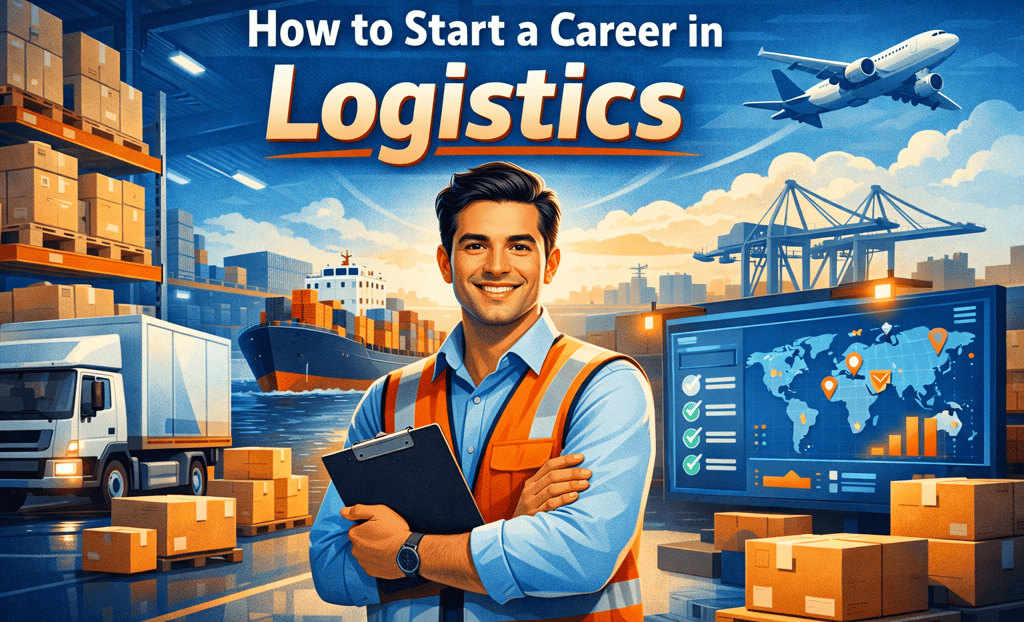
📦 What is a Career in Logistics?
A career in logistics involves managing the movement, storage, and flow of goods from suppliers to customers. It includes activities like:
Transportation management
Warehousing
Inventory control
Procurement
Distribution
Logistics plays a critical role in connecting production and consumption, making it essential for every industry.
📈 Why Choose a Career in Logistics?
Before getting started, here’s why logistics is a smart career choice:
✅ High Demand
With the rise of e-commerce and global trade, companies constantly need logistics professionals.
✅ Multiple Career Options
You can work in:
Retail (Amazon, Flipkart and many more)
Manufacturing
Automobile
FMCG
Shipping & ports
3PL (Third-party logistics)
✅ Fast Career Growth
You can start from entry-level roles and grow into management positions quickly with experience and skills.
✅ Job Stability
As long as goods are produced and consumed, logistics jobs will always exist.
🎓 Step 1: Get the Right Education
You don’t need a very specific degree to enter logistics—but having the right background helps.
🎯 Recommended Courses:
BBA in Supply Chain Management
B.Com (Logistics / Operations)
B.Tech (Industrial / Mechanical)
MBA in Supply Chain (for faster growth)
You can also start after 12th with:
Diploma in Logistics
Certification courses (Skill India, NSDC, etc.)
👉 A degree or diploma in logistics, business, or engineering is commonly preferred, but not mandatory.
🧠 Step 2: Learn Core Logistics Concepts
Before applying for jobs, you should understand the basics:
Warehouse Operations
Transportation & Freight
Import & Export (EXIM basics)
👉 Logistics professionals must plan, coordinate, and execute operations efficiently across multiple stages.
🛠️ Step 3: Develop Key Skills
Skills matter more than degrees in logistics. Here are the most important ones:
🔹 1. Communication Skills
You’ll deal with vendors, transporters, and teams daily.
🔹 2. Problem-Solving
Delays, damaged goods, and disruptions are common challenges.
🔹 3. Analytical Thinking
Understanding data, forecasting demand, and optimizing costs.
🔹 4. Attention to Detail
Small mistakes can lead to huge losses.
🔹 5. Technical Skills
Excel (Must-have)
ERP systems (SAP, Oracle)
Data tools (basic analytics)
👉 Strong communication and problem-solving are essential for logistics roles.
💼 Step 4: Start with Entry-Level Jobs
You don’t need experience to enter logistics. Start small and grow.
🔰 Entry-Level Roles:
Logistics Executive
Warehouse Assistant
Inventory Coordinator
Operations Executive
Dispatch Executive
👉 Freshers often begin with warehouse or 3PL roles and gain experience on the job.
🚀 Step 5: Gain Practical Experience
Logistics is a hands-on industry.
Ways to Gain Experience:
Internships
Part-time warehouse jobs
Apprenticeships
Freelance logistics coordination
Even 3–6 months of experience can make a huge difference.
📜 Step 6: Get Certifications (Optional but Powerful)
Certifications can boost your career growth:
CSCP (Certified Supply Chain Professional)
CLTD (Certified in Logistics, Transportation & Distribution)
Six Sigma (Green Belt)
👉 These certifications help you move into higher-paying roles faster.
🏢 Step 7: Apply for Jobs Strategically
Where to Apply:
LinkedIn
Naukri
Indeed
Company career pages
Pro Tips:
Use keywords like “Logistics Executive” or “Supply Chain Fresher”
Highlight Excel skills and internships
Network with professionals on LinkedIn
📊 Career Growth in Logistics
Here’s a typical career path:
Logistics Executive
Senior Executive
Team Lead / Supervisor
Operations Manager
Supply Chain Manager
👉 With experience, you can move into leadership roles managing entire supply chains.
🌍 Future Scope of Logistics
The future of logistics is extremely promising:
Growth of e-commerce
Automation & AI in supply chains
Expansion of global trade
Rising demand for skilled professionals
In fact, India alone is expected to need a huge logistics workforce in the coming years due to industry growth.
⚠️ Challenges in Logistics Career
Let’s be real—this field isn’t easy:
Long working hours
High pressure during delays
Coordination with multiple stakeholders
But if you enjoy problem-solving and fast-paced work, this career can be highly rewarding.
🧭 Final Roadmap (Quick Summary)
If you’re starting today, follow this:
Learn basics (YouTube + blogs)
Take a short course (optional)
Master Excel
Apply for entry-level jobs
Gain experience
Upskill & grow
🏁 Conclusion
Starting a career in logistics doesn’t require a perfect background—it requires skills, consistency, and willingness to learn.
The industry offers:
High growth
Multiple opportunities
Long-term stability
If you start today and stay consistent, you can build a strong career in logistics within 2–3 years.
Frequently Asked Questions (FAQ)
Q1. Is logistics a good career?
Yes, logistics is a fast-growing industry with strong demand due to e-commerce and global trade.
Q2. Can I start logistics career without experience?
Yes, you can start with entry-level roles like logistics executive or warehouse assistant.
Q3. What skills are required for logistics jobs?
Excel, communication, problem-solving, and basic supply chain knowledge.