Logistics vs Supply Chain: What’s the Difference? (Complete Guide with Real Examples)
Confused between logistics and supply chain? Learn the key differences between logistics and supply chain, types, real examples, and career paths in this simple, complete guide.
Understanding the difference between logistics and supply chain is essential for:
Business owners looking to optimize operations
Professionals building a career in this field
Students learning how global trade works
In this complete guide, you’ll learn:
What logistics really means
What a supply chain includes
Key differences between the two
Types of logistics with real-world examples
Career opportunities and growth
What Is Logistics?
Logistics refers to the planning, execution, and management of the movement and storage of goods, services, and information from the point of origin to the point of consumption. In simple terms, logistics is how products physically move from one place to another.
It ensures that the right product reaches the right customer at the right time, in the right condition, and at the lowest possible cost.
Key Functions of Logistics
Logistics is not just transportation—it includes multiple operational activities working together:
Transportation (road, rail, air, sea)
Warehousing and storage
Inventory handling
Order fulfillment (picking, packing, dispatch)
Distribution and delivery
Route optimization
Reverse logistics (returns and recycling)
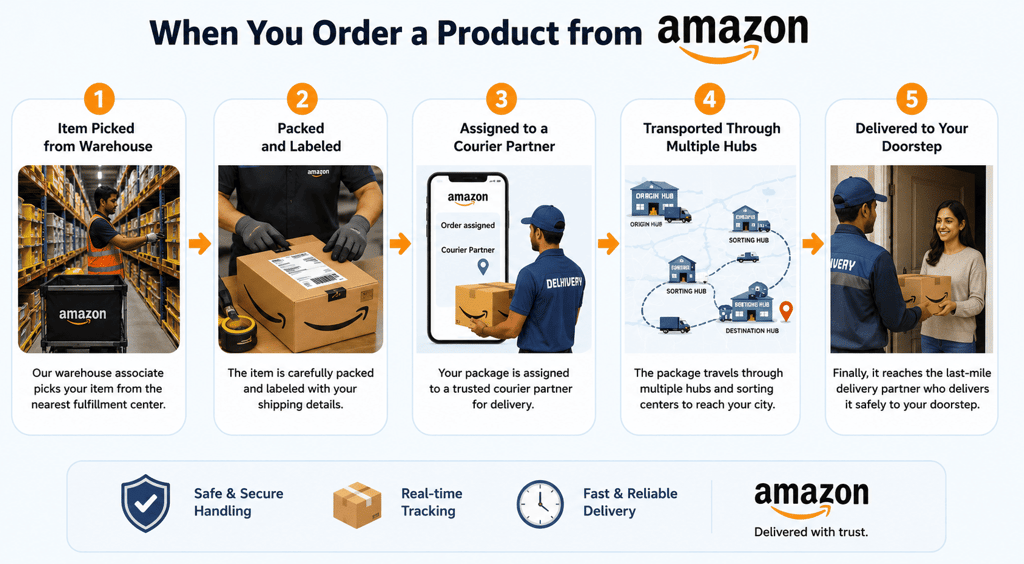
Real-World Logistics Example
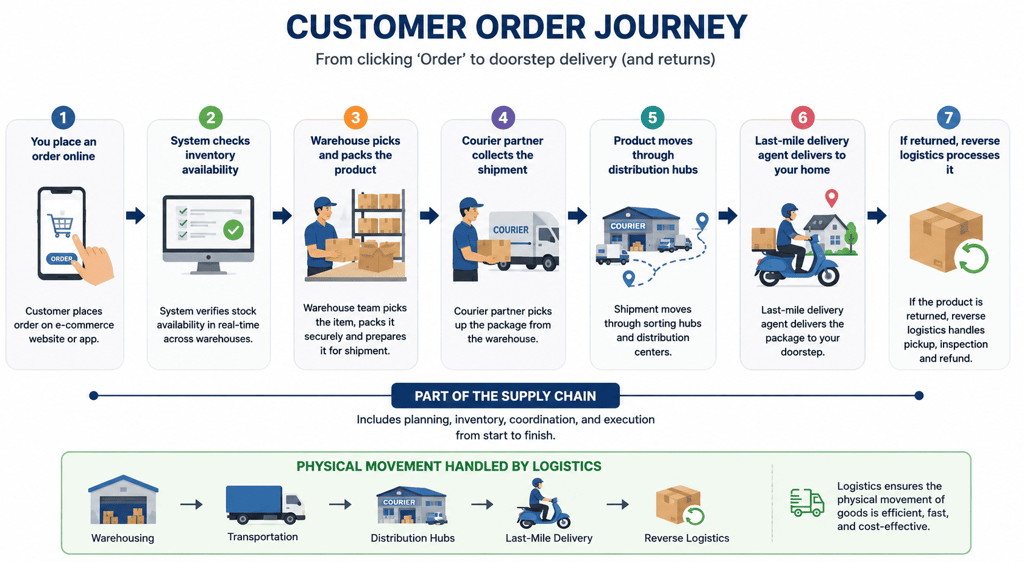
Here's a visual representation of how your amazon order arrives
Companies like Delhivery, DHL, and FedEx specialize in executing these logistics operations efficiently across countries.
Why Logistics Matters
Efficient logistics helps businesses:
Reduce transportation and storage costs
Improve delivery speed and reliability
Enhance customer satisfaction
Scale operations globally
Without logistics, even the best products would never reach customers.
What Is Supply Chain?
A supply chain is the entire network of people, processes, resources, and technologies involved in creating and delivering a product to the final customer. It starts from raw material sourcing and continues through manufacturing, storage, transportation, and delivery.
Unlike logistics, supply chain management focuses on end-to-end coordination and decision-making.
Key Components of Supply Chain
A supply chain includes:
Manufacturing (production process)
Logistics and transportation
Demand forecasting
Supplier relationship management
Order fulfillment
Customer service
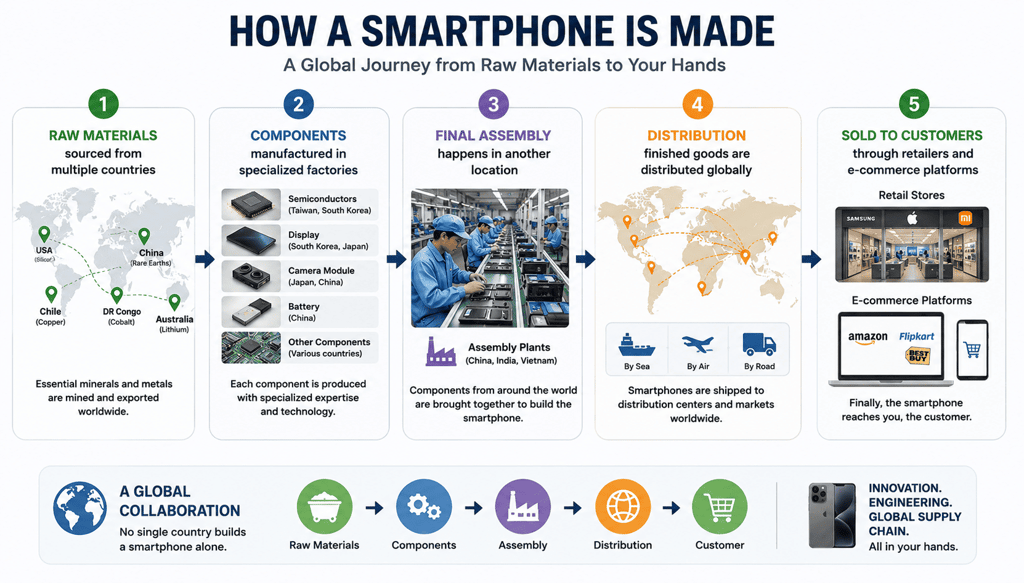
Real-World Supply Chain Example
Here's a visual representation of how a smartphone is made:
Companies like Apple and Samsung manage highly complex global supply chains involving hundreds of suppliers and logistics partners.
Why Supply Chain Matters
A well-managed supply chain:
Reduces operational costs
Prevents stockouts and overstocking
Improves efficiency across departments
Enables faster response to market demand
Provides competitive advantage
Logistics vs Supply Chain (Key Differences)
Here’s the most important comparison:
Key Takeaway
👉 Logistics is a part of the supply chain
👉 Supply chain is the complete system that includes logistics
Types of Logistics
1. Inbound Logistics
Inbound logistics refers to the movement of raw materials and components from suppliers to a company’s warehouse or production facility.
Key Activities
Supplier coordination
Transportation of raw materials
Receiving and inspection
Storage and inventory tracking
Example
An automobile manufacturer sourcing steel, tires, and engine components from suppliers relies on inbound logistics to ensure production runs smoothly.
Companies like Toyota depend heavily on efficient inbound logistics to support their just-in-time production systems.
Why It Matters
Prevents production delays
Reduces procurement costs
Ensures continuous manufacturing
2. Outbound Logistics
Outbound logistics involves the movement of finished goods from a company to customers, retailers, or distributors.
Key Activities
Order processing
Packaging and labeling
Shipping and distribution
Delivery tracking
Example
When you order a product online, the process of shipping it from a warehouse to your home is outbound logistics.
Retail giants like Walmart and Amazon rely on strong outbound logistics to meet customer expectations.
Why It Matters
Improves delivery speed
Enhances customer experience
Builds brand trust
3. Reverse Logistics
Reverse logistics refers to the movement of goods from customers back to the company for returns, repairs, recycling, or disposal.
Key Activities
Returns processing
Product inspection
Repair or refurbishment
Recycling and waste management
Refund handling
Example
E-commerce platforms like Flipkart and Amazon handle millions of returns, making reverse logistics a crucial function.
Why It Matters
Builds customer trust
Reduces waste
Recovers product value
4. Last-Mile Logistics
Last-mile logistics is the final step of delivery, where goods move from a distribution center to the customer’s location.
Key Activities
Route optimization
Local delivery operations
Real-time tracking
Customer communication
Example
A delivery partner from FedEx or Delhivery delivering a package to your home represents last-mile logistics.
Why It Matters
Directly impacts customer satisfaction
Often the most expensive delivery stage
Determines delivery speed and reliability
Why People Confuse Logistics and Supply Chain
Many people use these terms interchangeably because:
Logistics is the most visible part (delivery, tracking, delays)
Customers interact directly with logistics services
Logistics companies invest heavily in branding and marketing
Supply chain processes happen behind the scenes
The Reality
While logistics handles execution, supply chain professionals make decisions that control:
Cost optimization
Inventory levels
Supplier relationships
Production planning
Delivery timelines
Career Opportunities: Logistics vs Supply Chain
Both fields offer strong career opportunities, but they differ in scope and growth potential.
Careers in Logistics
Common roles include:
Warehouse Manager
Transportation Planner
Fleet Manager
Delivery Operations Manager
Characteristics
Operational and execution-focused
Fast-paced work environment
Good entry-level opportunities
Careers in Supply Chain
Common roles include:
Demand Planner
Procurement Analyst
Inventory Manager
Supply Chain Consultant
S&OP Manager
Characteristics
Strategic and analytical roles
Higher salary potential
Strong demand across industries
Which One Is Better?
There is no one-size-fits-all answer.
Choose logistics if you enjoy operations and on-ground execution
Choose supply chain if you prefer strategy, planning, and analytics
Many professionals start in logistics and later move into supply chain roles.
End-to-End Example: How a Product Reaches You
Let’s break down a typical customer order journey:
You place an order online
System checks inventory availability
Warehouse picks and packs the product
Courier partner collects the shipment
Product moves through distribution hubs
Last-mile delivery agent delivers to your home
If returned, reverse logistics processes it
This entire journey is part of the supply chain, while the physical movement is handled by logistics.
Final Thoughts
Understanding the difference between logistics and supply chain is crucial in today’s interconnected world.
To summarize:
Logistics focuses on the movement, storage, and delivery of goods
Supply chain covers the entire journey from raw materials to final customer
Logistics is a subset of the supply chain
Supply chain involves strategy, planning, and coordination
Both are essential for business success—and together, they ensure that products move efficiently across the globe.