Reverse Logistics in Supply Chain: Definition, Management & Solutions
Learn everything about reverse logistics including definition, process, management strategies, top companies, and solutions. Complete 2026 guide for businesses.
Supply Chain Navigator
5/18/20267 min read
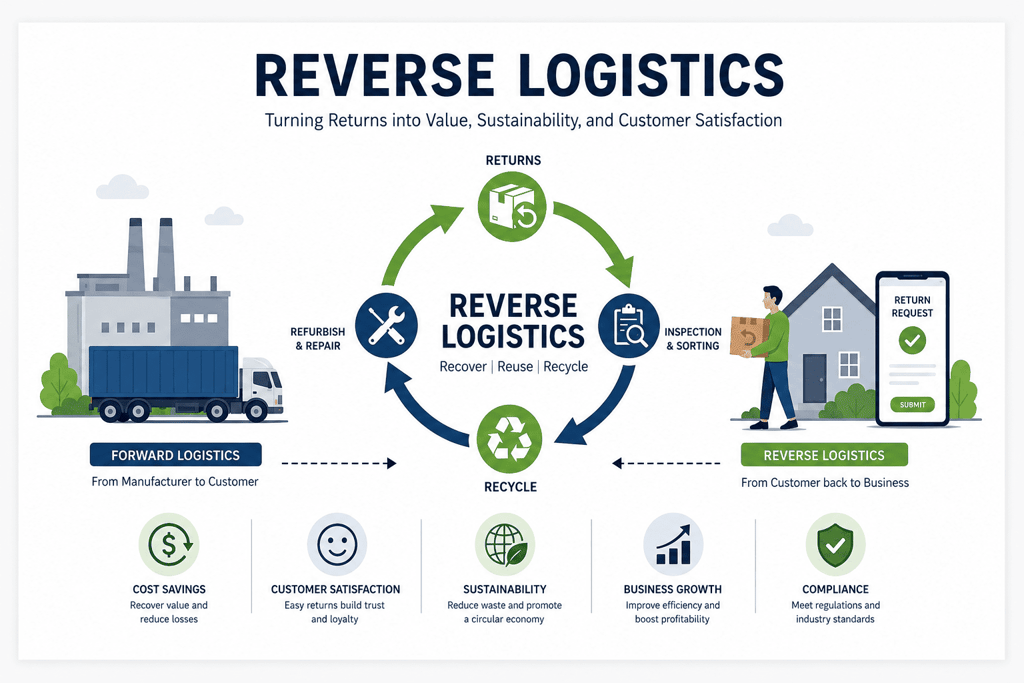
Reverse logistics isn’t just about handling product returns anymore—it’s turned into a real game‑changer for modern businesses, especially when viewed as part of the broader supply chain ecosystem. Thanks to the boom in e‑commerce, growing sustainability goals, and rising customer expectations, companies that get reverse logistics right can cut costs, keep customers happy, and even boost profits.
This guide breaks it all down for you. From what reverse logistics actually means to how the process works, smart management strategies, examples from leading companies, and practical solutions you can apply—it’s all here in one place
What is Reverse Logistics?
Reverse logistics refers to the process of moving goods from the customer back to the seller or manufacturer for purposes such as returns, repairs, recycling, refurbishment, or disposal. Unlike traditional (forward) logistics—which focuses on delivering products to customers—reverse logistics handles the flow of products backward in the supply chain, making it a critical part of modern logistics and supply chain management.
Simple Example:
A customer returns a defective product bought online
The company inspects it
It is repaired, resold, recycled, or disposed of
This process also impacts how businesses manage stock levels using effective inventory management techniques.
Why Reverse Logistics is Important?
Reverse logistics is not just an operational necessity—it’s a major driver of business success.
1. Improved Customer Satisfaction
Easy return policies do more than just simplify the shopping experience—they build real trust between a brand and its customers. When people know they can send something back without hassle, they feel more confident about hitting that ‘buy now’ button. That confidence often turns into loyalty, because customers are far more likely to shop again with a company that respects their time and money. In the long run, those smooth return experiences don’t just reduce friction—they encourage repeat purchases and strengthen the bond between business and buyer.
2. Cost Recovery
Returned products don’t have to be a dead loss. Instead of letting them pile up in warehouses, businesses can give these items a second life. Many returns can be refurbished—fixed up, repackaged, and made good as new—or resold at a discount. This way, companies recover value that would otherwise be written off, while customers get access to affordable options. It’s a win‑win: less waste, more savings, and a smarter way to turn returns into revenue. Many businesses also use methods like FIFO (First In, First Out) to decide how returned inventory is resold or reused.
3. Sustainability & Compliance
Recycling and proper disposal aren’t just about ticking boxes—they’re about protecting the planet and staying compliant. When businesses recycle materials or dispose of products responsibly, they cut down on pollution, reduce landfill waste, and show customers they care about sustainability. At the same time, following disposal regulations keeps companies out of trouble with authorities and avoids costly fines. In short, smart recycling practices not only shrink environmental impact but also keep operations smooth and reputation strong.
4. Competitive Advantage
In today’s crowded markets, standing out is tough—but efficient reverse logistics can give your brand the edge it needs. When customers see that returns, recycling, and refurbishing are handled smoothly, they don’t just notice the convenience—they remember the brand behind it. That kind of reliability builds trust, sets you apart from competitors, and shows that your company values both customer satisfaction and sustainability. In the end, reverse logistics isn’t just a back‑end process—it’s a powerful differentiator that can turn everyday operations into a brand‑building advantage. Companies that integrate reverse logistics with warehouse operations often achieve faster processing and better efficiency.
Types of Reverse Logistics
Reverse logistics covers multiple processes, depending on the product and industry:
1. Returns Management - Handling customer returns due to defects, wrong items, or dissatisfaction.
2. Remanufacturing & Refurbishment - Repairing products and reselling them at reduced prices.
3. Recycling - Recovering materials from used products to create new ones.
4. Disposal - Safely discarding products that cannot be reused.
5. Unsold Goods Return - Retailers returning unsold inventory to suppliers.
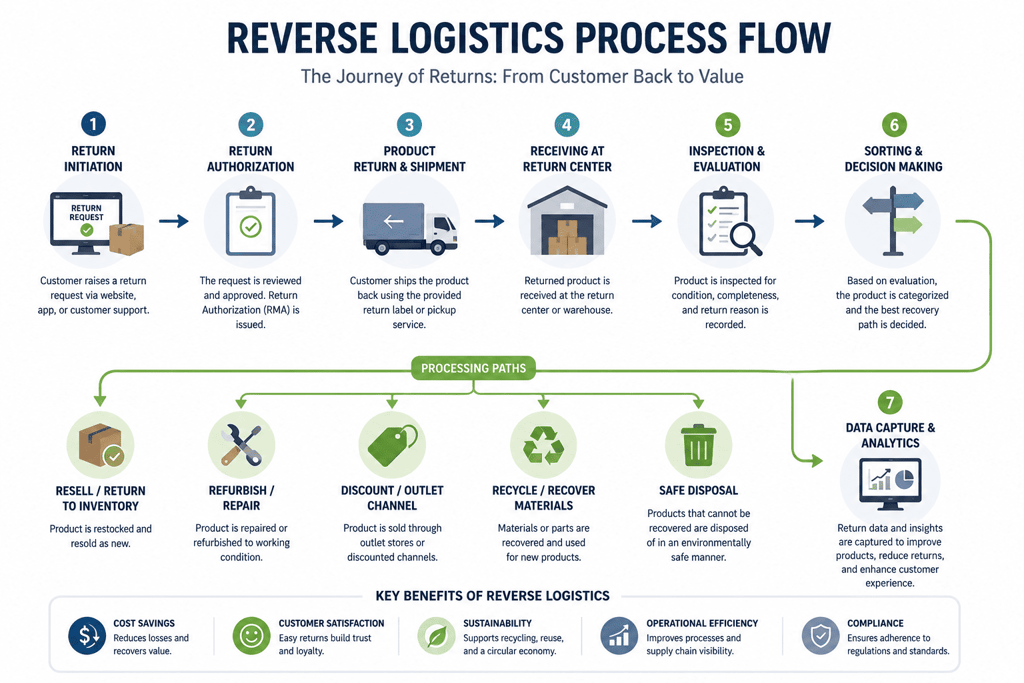
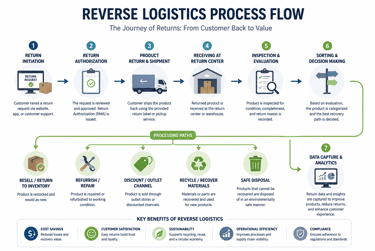
Reverse Logistics Process Flow
A typical reverse logistics process includes:
Product Return Initiation
Customer requests a return via website/appTransportation
Product is shipped back to warehouse or return centerInspection & Sorting
Items are checked for condition and categorizedProcessing Decision
Resell
Repair
Recycle
Dispose
Reintegration
Products re-enter inventory or secondary markets
Reverse Logistics vs Forward Logistics
Reverse logistics is typically more complex due to uncertainty in timing, volume, and product condition.
Reverse Logistics Management
Efficient reverse logistics demands a well‑balanced mix of strategy, technology, and supply chain coordination. Companies that streamline these processes can cut costs while keeping customer satisfaction high.
Key Components:
1. Returns Policy Optimization
A clear and customer-friendly returns policy helps reduce confusion and unnecessary returns. Well-defined timelines, conditions, and refund processes improve transparency, build trust, and streamline operations, ultimately lowering handling costs and enhancing customer experience.
2. Inventory Visibility
Real-time tracking of returned products is essential for efficient reverse logistics management. It allows businesses to quickly identify product status, location, and condition, enabling faster decisions on restocking, refurbishment, or disposal while improving overall supply chain visibility.
3. Warehouse Management
Efficient warehouse management includes setting up dedicated zones for returns processing. Proper sorting, inspection, and handling workflows reduce delays and errors, helping businesses process returns faster and reintegrate usable products back into inventory efficiently.
4. Data Analytics
Analyzing return data helps identify patterns such as frequent defects, sizing issues, or customer dissatisfaction. These insights allow businesses to take corrective actions, improve product quality, reduce return rates, and make more informed supply chain decisions.
5. Automation & Technology
Using advanced software and automation tools simplifies returns management by streamlining approvals, tracking shipments, and processing refunds. Technologies like AI and machine learning further enhance efficiency by predicting returns and optimizing reverse logistics operations.
Challenges
Despite its benefits, reverse logistics comes with several challenges:
High operational costs
Unpredictable return volumes
Product condition variability
Complex transportation
Lack of visibility
Many businesses underestimate these challenges, leading to inefficiencies and losses.
Reverse Logistics Solutions
To overcome operational challenges and improve efficiency, companies are increasingly adopting advanced reverse logistics solutions. These solutions help streamline returns, reduce costs, and enhance overall supply chain performance.
1. Returns Management Software
Returns management software automates the entire return lifecycle, from request initiation to final resolution. It improves accuracy, reduces manual effort, and provides real-time tracking, enabling businesses to handle high return volumes efficiently and enhance customer satisfaction.
2. Third-Party Logistics (3PL)
Outsourcing reverse logistics to 3PL providers allows companies to leverage specialized expertise, infrastructure, and technology. This reduces operational complexity, lowers costs, and enables businesses to focus on core activities while ensuring efficient returns handling.
3. AI & Data Analytics
AI-driven analytics help predict return trends, identify root causes, and optimize inventory planning. By leveraging data insights, businesses can reduce return rates, improve product quality, and make smarter decisions across the reverse logistics process.
4. Automation in Warehouses
Warehouse automation technologies such as robotics, barcode scanning, and conveyor systems significantly speed up sorting, inspection, and processing of returned goods. This improves accuracy, reduces labor dependency, and enhances overall operational efficiency.
5. Circular Supply Chain Models
Circular supply chain models emphasize reuse, refurbishment, and recycling of products. By extending product life cycles and minimizing waste, businesses can reduce environmental impact, comply with regulations, and unlock new revenue streams through resale and recovery.
Top Companies Leading in Reverse Logistics
When it comes to reverse logistics, a few global giants have really set the bar high. They’ve turned returns, recycling, and recovery into smooth, efficient systems that not only save money but also keep customers happy. Let’s take a look at some of the leaders:
Amazon - Amazon has built one of the most advanced return systems in the world. With hassle‑free return policies and highly automated warehouses, products move quickly through the process—whether they’re being restocked, refurbished, or resold. This efficiency is a big reason customers trust Amazon’s shopping experience.
Walmart - Walmart takes a sustainability‑driven approach. Its reverse logistics programs emphasize recycling and cost recovery, helping the company reduce waste while keeping operations lean. It’s a smart balance of environmental responsibility and business efficiency.
DHL - DHL specializes in tailored reverse logistics services for businesses worldwide. From handling returns to offering recycling solutions, DHL makes it easier for companies to manage the complex side of product flow after sales.
FedEx - FedEx integrates reverse logistics into its broader supply chain solutions, offering tracking and visibility at every step. That transparency helps businesses and customers stay informed, reducing friction in the returns process.
Apple - Apple’s trade‑in and recycling programs are standout examples of the circular economy in action. By encouraging customers to return old devices, Apple recycles valuable materials and gives products a second life—showing how reverse logistics can align perfectly with sustainability goals.
Reverse Logistics and Sustainability
Reverse logistics isn’t just about handling returns—it’s a big win for the planet too. By keeping products out of landfills, encouraging recycling and reuse, and supporting the circular economy, it helps businesses shrink their carbon footprint while doing the right thing for the environment. With both governments and consumers pushing harder for sustainable practices, reverse logistics has become more than a supply chain function—it’s now an essential driver of environmental sustainability and brand responsibility.
Technologies Transforming Reverse Logistics
Modern technologies are reshaping reverse logistics:
IoT (Internet of Things) – Real-time tracking of returned goods
Blockchain – Transparent and secure tracking
AI & Machine Learning – Demand forecasting and return prediction
Automation & Robotics – Faster warehouse operations
How to Build an Effective Reverse Logistics Strategy?
If you want to implement or improve reverse logistics, follow this roadmap:
Step 1: Analyze Current Returns - Understand why customers return products.
Step 2: Optimize Return Policies - Balance customer satisfaction and cost control.
Step 3: Invest in Technology - Use software for tracking and automation.
Step 4: Partner with Experts - Work with 3PL providers if needed.
Step 5: Focus on Sustainability - Adopt recycling and reuse strategies.
Future Trends in Reverse Logistics (2026 & Beyond)
Rise of circular supply chains
Increased use of AI-driven automation
Growth of recommerce (reselling returned goods)
Stronger focus on sustainability regulations
Expansion of reverse logistics as a service (RLaaS)
Conclusion
Reverse logistics has shifted from being seen as just another expense to becoming a real game‑changer for businesses. Companies that invest in smart, efficient systems don’t just save money—they also boost customer satisfaction and strengthen their sustainability efforts. And with e‑commerce continuing to expand at lightning speed, mastering reverse logistics isn’t optional anymore—it’s a must‑have strategy for long‑term success in the global supply chain. In short, what used to be a cost center is now a powerful opportunity to drive profitability, customer loyalty, and environmental responsibility all at once.
Frequently asked questions
What is reverse logistics in simple terms?
Reverse logistics is the process of moving products from customers back to companies for returns, repairs, recycling, or disposal.
Why is reverse logistics important?
It helps recover value, reduce costs, improve customer satisfaction, and support sustainability.
What companies use reverse logistics?
Major companies like Amazon, Walmart, and DHL use advanced reverse logistics systems.
What are reverse logistics examples?
Examples include product returns, recycling programs, refurbishing electronics, and handling unsold inventory.
How can businesses improve reverse logistics?
By using technology, optimizing return policies, analyzing data, and partnering with logistics providers.