FIFO vs LIFO: Understanding Key Inventory Valuation Methods for Global Businesses
Learn the key differences between FIFO vs LIFO, including inventory flow, cost of goods sold, profit impact, tax benefits, and global accounting rules with simple examples.
INVENTORYFEATURED POSTS
What is FIFO (First-In, First-Out)?
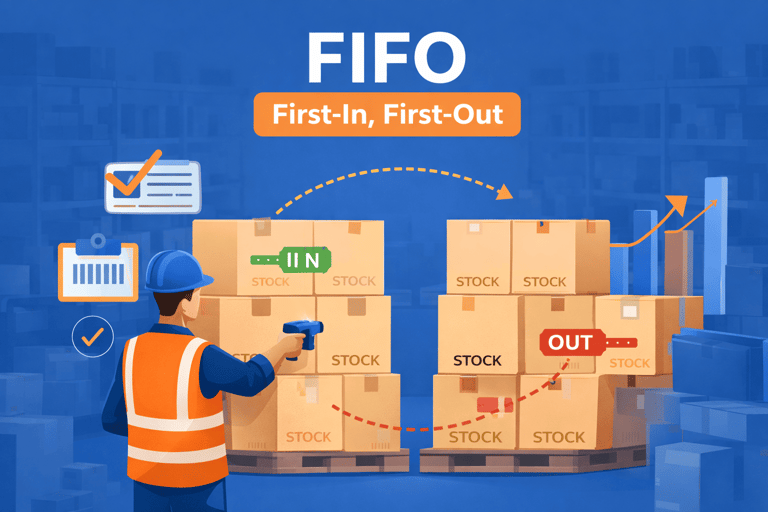
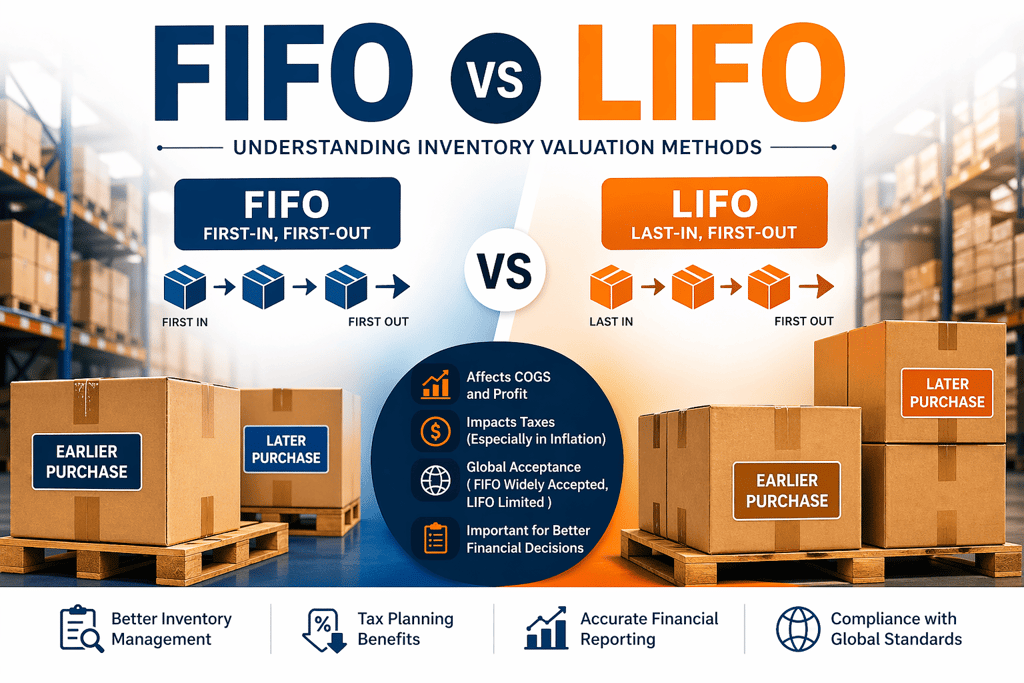
FIFO assumes that the oldest inventory items are sold or used first. In other words, the first products you purchase are the first ones to leave your inventory.
Example of FIFO
Let’s say a company purchases inventory in the following order:
100 units at $10 each
100 units at $12 each
If the company sells 100 units, under FIFO:
The cost of goods sold (COGS) = 100 units × $10 = $1,000
Remaining inventory = 100 units at $12
Key Characteristics of FIFO
Inventory reflects recent (current) prices
COGS reflects older (historical) costs
Often aligns with the physical flow of goods (especially perishable items)
What is LIFO (Last-In, First-Out)?
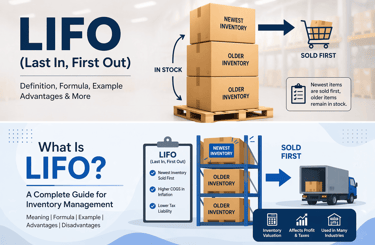
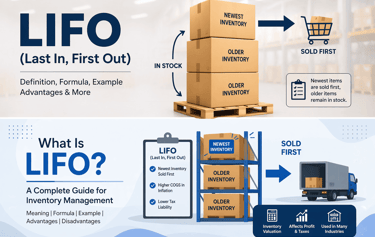
LIFO assumes that the most recently purchased inventory is sold first. The latest items added to inventory are the first ones to be used or sold.
Example of LIFO
Using the same data:
100 units at $10 each
100 units at $12 each
If the company sells 100 units, under LIFO:
COGS = 100 units × $12 = $1,200
Remaining inventory = 100 units at $10
Key Characteristics of LIFO
Inventory reflects older (historical) costs
COGS reflects recent (current) costs
Often used for financial and tax benefits in certain regions
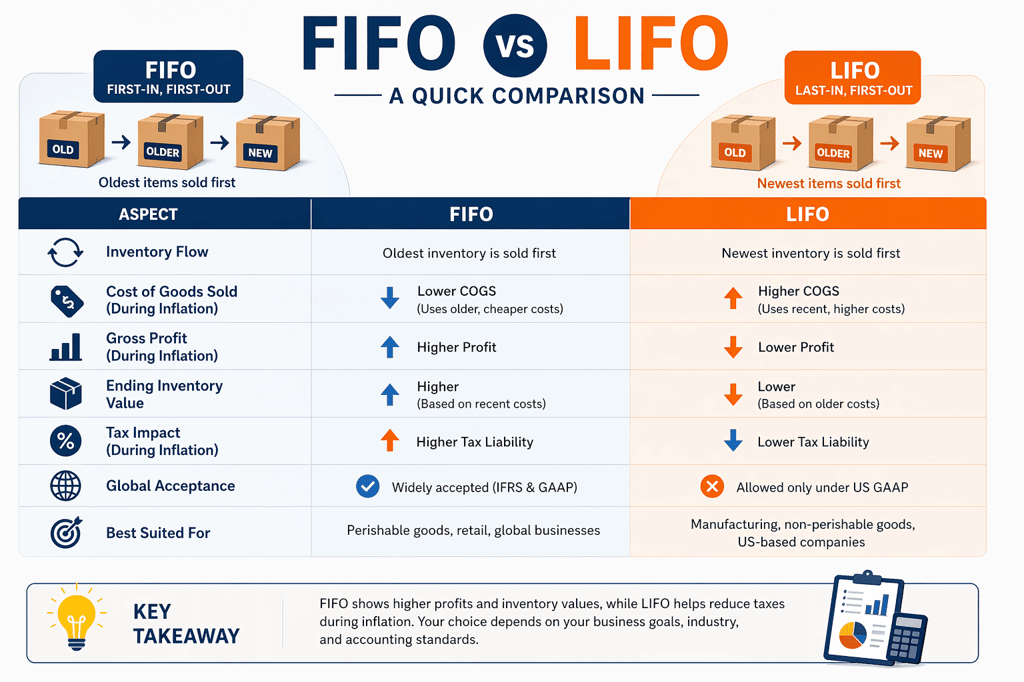
FIFO vs LIFO: Key Differences
Impact of Inflation
The difference between FIFO and LIFO becomes more significant during inflation (when prices are rising).
Under Inflation:
FIFO:
Uses older, cheaper costs for COGS
Results in higher profit
Leads to higher taxes
LIFO:
Uses recent, higher costs for COGS
Results in lower profit
Leads to lower taxes
This is one of the main reasons companies choose LIFO where it is allowed.
Global Accounting Perspective
One critical factor to understand is that LIFO is not permitted under International Financial Reporting Standards (IFRS), which are used in most countries worldwide.
FIFO is accepted globally under both IFRS and GAAP
LIFO is allowed under US GAAP, but not under IFRS
What this means:
Companies operating internationally typically use FIFO
Multinational firms often avoid LIFO to maintain consistency across countries
Advantages of FIFO
1. Better Reflection of Inventory Value
Ending inventory is based on recent costs, making it closer to current market value.
2. Simplicity and Logical Flow
FIFO aligns with the natural movement of goods, especially in industries like food, pharmaceuticals, and retail.
3. Higher Profit Reporting
During inflation, FIFO results in higher profits, which can be beneficial for investors and stakeholders.
Disadvantages of FIFO
1. Higher Tax Burden
Higher profits mean higher taxable income.
2. Less Matching of Current Costs
COGS reflects older costs, which may not match current revenue levels.
Advantages of LIFO
1. Tax Benefits
Lower profits during inflation lead to lower taxes.
2. Better Matching Principle
COGS reflects current costs, providing a more realistic view of profitability.
Disadvantages of LIFO
1. Not Globally Accepted
LIFO is banned under IFRS, limiting its use internationally.
2. Outdated Inventory Valuation
Ending inventory may be valued at very old costs, making balance sheets less realistic.
3. Complexity
Maintaining LIFO layers can be complicated, especially for large inventories.
Real-World Application
FIFO is commonly used in:
Retail (e.g., supermarkets)
Food and beverage industries
Pharmaceuticals
E-commerce businesses
LIFO is often used in:
Manufacturing companies (in the U.S.)
Industries dealing with non-perishable goods
Businesses looking to reduce tax liability during inflation
Which Method Should You Choose?
The choice between FIFO and LIFO depends on several factors:
Choose FIFO if:
You operate globally
You want accurate inventory valuation
You deal with perishable goods
You follow IFRS
Choose LIFO if:
You operate in the United States
You want to reduce taxable income
Your inventory costs are rising significantly
FIFO vs LIFO: Quick Summary
FIFO sells older inventory first → Higher profits, higher taxes
LIFO sells newer inventory first → Lower profits, lower taxes
FIFO is globally accepted → LIFO is restricted
FIFO shows realistic inventory value → LIFO focuses on tax efficiency
Final Thoughts
FIFO and LIFO are more than just accounting methods—they directly impact how businesses report profits, manage taxes, and present financial health.
For a global audience, FIFO is generally the preferred and more practical method, given its widespread acceptance and alignment with real-world inventory flow. However, LIFO still plays a strategic role in regions like the United States, especially for companies looking to manage tax exposure during inflationary periods.
Understanding both methods allows businesses to make informed decisions that align with their operational, financial, and regulatory needs.
If you're building expertise in supply chain or planning to optimize your inventory strategy, mastering concepts like FIFO and LIFO is a strong foundation for long-term success.
Frequently Asked Questions (FAQs)
1. What is the main difference between FIFO and LIFO?
The primary difference lies in how inventory is issued. FIFO (First-In, First-Out) assumes the oldest inventory is sold first, while LIFO (Last-In, First-Out) assumes the most recently purchased inventory is sold first. This difference directly impacts cost of goods sold (COGS), profit, and taxes.
2. Which method is better: FIFO or LIFO?
There is no universally “better” method—it depends on business goals and location. FIFO is better for global compliance and accurate inventory valuation, while LIFO can be beneficial for reducing taxes during inflation (mainly in the United States).
3. Why is LIFO not allowed in many countries?
LIFO is not permitted under international accounting standards (IFRS) because it can undervalue inventory on the balance sheet and does not reflect the actual physical flow of goods in most industries.
4. How does inflation affect FIFO and LIFO?
During inflation:
FIFO results in lower COGS and higher profits
LIFO results in higher COGS and lower profits
This also means FIFO leads to higher taxes, while LIFO reduces tax burden.
5. Which industries commonly use FIFO?
FIFO is widely used in industries where goods are perishable or have expiration dates, such as:
Food and beverage
Pharmaceuticals
Retail and e-commerce
6. Can a company switch from FIFO to LIFO or vice versa?
Yes, companies can switch methods, but it requires proper accounting adjustments, regulatory approvals, and disclosure in financial statements. Frequent switching is generally discouraged.
7. Does FIFO or LIFO affect cash flow?
Yes, indirectly. Since FIFO usually results in higher profits and taxes, it may reduce cash flow. LIFO, on the other hand, can improve cash flow by lowering tax payments during inflation.
8. Which method is more realistic for inventory tracking?
FIFO is generally considered more realistic because it aligns with the natural movement of goods—older items are typically used or sold before newer ones.
9. Is LIFO still used today?
Yes, LIFO is still used, primarily in the United States under US GAAP. However, its usage is limited globally due to regulatory restrictions.
10. How do FIFO and LIFO impact financial statements?
FIFO shows higher ending inventory and higher profits
LIFO shows lower ending inventory and lower profits
These differences affect key financial metrics like gross margin, net income, and tax liability.