How to Start a Career in Logistics and Supply Chain (Complete Beginner Guide 2026)
If you’re wondering “How to start a career in logistics and supply chain?”, this guide will walk you through everything—from education and skills to jobs and growth opportunities.
What Does a Career in Logistics & Supply Chain Look Like?
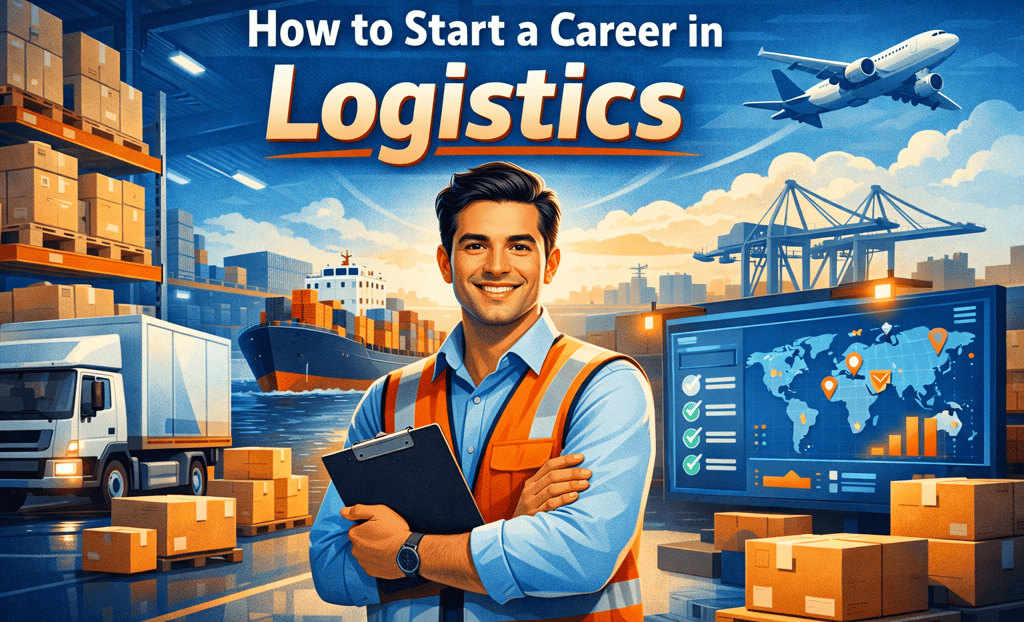
A career in logistics and supply chain management is all about keeping the world moving efficiently—from raw materials to finished products reaching customers on time. It involves planning, coordinating, and optimizing the flow of goods, information, and resources across different stages of the supply chain.
In this field, no two days are the same. One day you might be tracking shipments and managing inventory, while the next you’re solving delivery delays, coordinating with suppliers, or analyzing data to reduce costs. It’s a dynamic career that combines operations, problem-solving, and technology.
What makes this career exciting is its global impact and wide scope. Whether it’s e-commerce, manufacturing, retail, or international trade, every industry depends on efficient logistics. As a result, professionals in this field have opportunities to work in diverse roles such as warehouse operations, procurement, transportation, demand planning, and supply chain analytics.
Overall, a career in logistics and supply chain offers a mix of fast-paced work, continuous learning, and strong growth opportunities, making it an ideal choice for those who enjoy solving real-world challenges and improving how businesses operate.
🚀 Why Choose a Career in Logistics & Supply Chain?
Logistics and supply chain management has become one of the most in-demand career fields today, especially with the rapid growth of global trade and e-commerce. Here’s why it’s a smart career choice:
✅ High Demand
With the rise of online shopping platforms like Amazon and Flipkart, along with expanding global trade networks, companies constantly need skilled logistics professionals. From managing warehouses to optimizing deliveries, the demand for talent in this field continues to grow across industries and countries.
✅ Multiple Career Options
Logistics offers a wide range of career paths, giving you flexibility to choose based on your interests:
Retail & E-commerce – Order fulfillment, last-mile delivery
Manufacturing – Production planning and inventory control
Automobile – Supply chain coordination and parts management
FMCG – Fast-moving goods distribution and demand planning
Shipping & Ports – International logistics and freight handling
3PL (Third-Party Logistics) – End-to-end supply chain services
This diversity means you’re not limited to one industry—you can switch roles and sectors easily.
✅ Fast Career Growth
One of the biggest advantages of this field is rapid career progression. You can start in entry-level roles like warehouse executive or logistics coordinator and quickly move into roles such as supply chain analyst, operations manager, or logistics head. With the right skills, certifications, and experience, growth opportunities are strong and consistent.
✅ Job Stability
Logistics is the backbone of every industry. As long as products are being manufactured, transported, and sold, there will always be a need for logistics professionals. This makes it a stable and future-proof career, even during economic fluctuations.
✅ Global Opportunities
Supply chain is a global function, which means skilled professionals can find opportunities not just locally but internationally. Knowledge of global trade, shipping, and procurement can open doors to careers across different countries.
✅ Skill-Based Growth
This field values practical skills such as problem-solving, data analysis, and process optimization. By learning tools like ERP systems, warehouse management systems (WMS), and analytics, you can significantly boost your career prospects.
🎓 Step 1: Get the Right Education
If you're planning to build a career in logistics and supply chain management, there are several educational paths you can choose from depending on your goals and stage of learning:
🎓 Degree Programs
Bachelor’s in Business Administration (BBA) – Supply Chain / Operations Management
Bachelor’s in Commerce (B.Com) – Logistics / Operations
Bachelor’s in Engineering (Industrial, Mechanical, or related fields)
Master of Business Administration (MBA) – Supply Chain Management (ideal for faster career growth and leadership roles)
📘 Entry Options After High School
You can also start your journey right after high school with:
Diploma in Logistics or Supply Chain Management
Professional certification courses from recognized institutions or industry bodies
Examples include programs offered by organizations like APICS or CILT, which are globally recognized.
🧠 Step 2: Learn Core Logistics Concepts
Before applying for jobs, you should understand the basics:
Warehouse Operations
Transportation & Freight
Import & Export (EXIM basics)
👉 Logistics professionals must plan, coordinate, and execute operations efficiently across multiple stages.
🛠️ Step 3: Develop Key Skills
In today’s logistics industry, skills often matter more than degrees. Employers across the world look for professionals who can handle real-world challenges, adapt quickly, and improve operations. Here are the most important skills you should focus on:
🔹 1. Communication Skills
Logistics professionals interact with suppliers, transport partners, warehouse teams, and customers on a daily basis. Clear and effective communication helps avoid misunderstandings, ensures smooth coordination, and improves overall efficiency—especially in global supply chains.
🔹 2. Problem-Solving
Delays, damaged shipments, customs issues, and unexpected disruptions are common in logistics. The ability to think quickly, find practical solutions, and minimize impact is highly valued in this field.
🔹 3. Analytical Thinking
Modern supply chains rely heavily on data. You need to analyze inventory levels, forecast demand, track performance metrics, and identify cost-saving opportunities. Strong analytical skills help in making better, data-driven decisions.
🔹 4. Attention to Detail
In logistics, even small errors—like incorrect quantities, wrong addresses, or missed deadlines—can lead to major financial losses. Being detail-oriented ensures accuracy in operations and improves reliability.
🔹 5. Technical Skills
Technology plays a key role in modern logistics. Having basic technical knowledge can give you a strong advantage:
Microsoft Excel – Essential for data analysis and reporting
ERP Systems like SAP and Oracle ERP – Used for managing operations and inventory
Data Tools & Analytics – Basic understanding of dashboards and reporting tools
💼 Step 4: Start with Entry-Level Jobs
You don’t need experience to enter logistics. Start small and grow.
🔰 Entry-Level Roles:
Logistics Executive
Warehouse Assistant
Inventory Coordinator
Operations Executive
Dispatch Executive
👉 Freshers often begin with warehouse or 3PL roles and gain experience on the job.
🚀 Step 5: Gain Practical Experience
Logistics is a hands-on industry.
Ways to Gain Experience:
Internships
Part-time warehouse jobs
Apprenticeships
Freelance logistics coordination
Even 3–6 months of experience can make a huge difference.
📜 Step 6: Get Certifications (Optional but Powerful)
Certifications can boost your career growth:
CSCP (Certified Supply Chain Professional)
CLTD (Certified in Logistics, Transportation & Distribution)
Six Sigma (Green Belt)
👉 These certifications help you move into higher-paying roles faster.
🏢 Step 7: Apply for Jobs Strategically
🌍 Where to Apply for Logistics & Supply Chain Jobs
You can explore job opportunities through a variety of global and regional platforms:
LinkedIn – Best for networking and job applications worldwide
Indeed – One of the largest global job search engines
Naukri – Popular platform for opportunities in India and nearby regions
Company Career Pages – Apply directly through official company websites for the latest openings
Pro Tips:
Use keywords like “Logistics Executive” or “Supply Chain Fresher”
Highlight Excel skills and internships
Network with professionals on LinkedIn
📊 Career Growth in Logistics
Here’s a typical career path:
Logistics Executive
Senior Executive
Team Lead / Supervisor
Operations Manager
Supply Chain Manager
👉 With experience, you can move into leadership roles managing entire supply chains.
🌍 Future Scope of Logistics
The future of logistics is extremely promising:
Growth of e-commerce
Automation & AI in supply chains
Expansion of global trade
Rising demand for skilled professionals
In fact, India alone is expected to need a huge logistics workforce in the coming years due to industry growth.
⚠️ Challenges in Logistics Career
Let’s be real—this field isn’t easy:
Long working hours
High pressure during delays
Coordination with multiple stakeholders
But if you enjoy problem-solving and fast-paced work, this career can be highly rewarding.
🧭 Final Roadmap (Quick Summary)
If you’re starting your journey in logistics and supply chain today, here’s a simple step-by-step roadmap to follow:
Learn the basics – Start with free resources like YouTube, blogs, and online articles to understand core concepts
Take a short course (optional) – Enroll in beginner-friendly courses or certifications to build foundational knowledge
Master essential tools – Focus on skills like Microsoft Excel and basic data analysis, which are widely used in the industry
Apply for entry-level roles – Look for positions such as warehouse executive, logistics coordinator, or supply chain assistant
Gain practical experience – Learn on the job, understand real-world operations, and build problem-solving skills
Upskill and grow – Continuously improve by learning advanced tools, certifications, and industry best practices
Consistency matters more than perfection—start small, keep learning, and gradually build your career in logistics and supply chain management.
🏁 Conclusion
Starting a career in logistics doesn’t require a perfect background—it requires skills, consistency, and willingness to learn.
The industry offers:
High growth
Multiple opportunities
Long-term stability
If you start today and stay consistent, you can build a strong career in logistics within 2–3 years.